


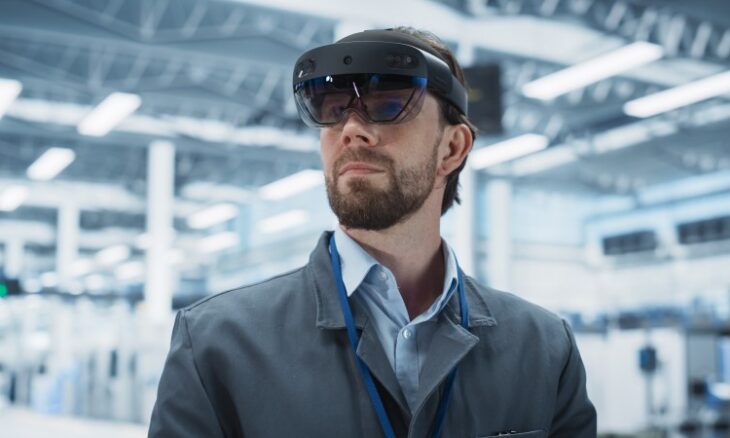
Google expands Android XR for AI and wearable devices
Google is preparing a strategic shift to combine artificial intelligence with extended reality technologies as part of the next stage of smartphone development. The company plans to expand the Android ecosystem beyond traditional mobile devices into new categories, including smart glasses and AI-powered wearables.
Generative AI models, particularly Google’s Gemini, are central to this development. The system is already integrated across several Google services. It is being extended to mobile devices to support natural language processing, contextual assistance, and automatic content summarisation that can run directly on the device.
Android XR is an open operating system under development by Google, Samsung, and Qualcomm. The platform is designed for augmented and mixed reality hardware, enabling Android to support devices beyond conventional smartphones. Under the arrangement, Qualcomm supplies dedicated XR processors, Samsung produces hardware devices, and Google is responsible for operating system development and AI service integration.
The structure reflects the approach used during Android’s early expansion in the smartphone market, when Google provided the software platform and manufacturing partners drove device availability. Android XR is intended to support compatibility across products and reduce fragmentation as XR hardware becomes more widely introduced.
Google previously released wearable display technology, including Google Glass in 2013, which did not achieve broad consumer adoption. Current hardware capabilities differ from earlier generations due to improvements in generative AI processing, edge computing, and power efficiency. These advances support XR devices that operate with lower weight, improved responsiveness, and reduced latency.
The wider technology sector is also introducing spatial and mixed reality hardware. Apple has released the Apple Vision Pro spatial computing headset, while several Android device manufacturers are developing AI-enabled smart glasses and related products. Industry development is expanding beyond incremental smartphone hardware upgrades toward devices designed for immersive, context-based computing.
Google’s AI-first approach places Gemini at the centre of the Android XR experience. The integration supports multimodal search that combines voice, text, and visual input, automatic summarisation of complex information, and conversational command interaction. These functions are designed for XR environments where user input may rely on voice control, gestures, and eye tracking rather than touch-based interfaces.
Extending Android to XR hardware builds on the platform’s global scale, which includes more than two billion active devices. The open platform model is intended to support manufacturer participation, encourage product development, and establish technical standards across hardware and software. The ecosystem also supports revenue through services, advertising, and application distribution.
No commercial release timeline has been announced for Android XR. The initiative reflects Google’s development of software and AI systems designed for new device categories beyond the traditional smartphone form factor.